Written: August 16th-22nd, 2015
Hello everyone, StarBoy91 here; passionate about video games, big retrophile, and fan of all things 16-bit. =) Everyone knows about Mickey Mouse, but someone who often gets the short end of the stick and isn't anywhere near as popular is Donald Duck, whom I consider to be an underrated character. It's amazing that the sailor duck has been around for eighty-one years now.
Which makes the series of events on the Nintendo side of things during the 8- and 16-bit era pretty sad. =( When it comes to video games based on licensed property, a lot of it is the result of profitability, and other causes attribute to fan demand. One downside to being the second best known character is you'll often be overshadowed by the single best known: in this case, Donald overshadowed by Mickey.
On the Super Famicom/Super Nintendo many Disney games have come and gone, but not one of them was devoted to Donald Duck being the main character. But after five nagging reminders (read: cameos) Donald at last started to get his own games for that console... in 1995. Yyyeah, by the time that happened the Nintendo 16-bit console reached its mid-life and gradually began to lose steam... which is even more sad when Donald's 16-bit foray on Sega's side occurred four years prior when it was young. =(
Fortunately for Donald he got to (co)headline three games for both consoles; unfortunately, on the Nintendo side of things only one came out in the West: the Euro platformer Donald in (Maui Mallard) in Cold Shadow. Not to knock that game, as it is good in its own right, but the fact that the other two games were not given a proper shot outside Japan during their heyday is unforgiveable and it just shows how little confidence or demand Nintendo distributors had for Donald Duck in America and Europe. One of those games, at least for awhile, was the game I'm going to talk about today.


Capcom's 1992 16-bit Disney foray The Magical Quest starring Mickey Mouse on the Nintendo 16-bit console was a big hit with gamers, and for good reason. Personally I found it to be really good, with nondemanding fun and magically intuitive gameplay, great environments, wonderful music, and boosted an enjoyably lighthearted charm throughout despite ending on a damagingly low note (it's nothing but a dream, revealed last minute) and suffering a bit from having unevenly lengthed areas. Even so, it's very fun to play once in awhile and most gamers seem to share the same sentiment. =)


The success of Capcom's first 16-bit Disney title led to the 1994 release of the first sequel The Great Circus Mystery starring Mickey & Minnie, which had Mickey and Minnie Mouse venture (together or separately) to solve a pretty unmysterious mystery (Pete's behind it all) and salvage the circus. While it did perform greatly saleswise it was met with mixed to generally positive reviews, with common complaints being that the magic is nowhere near as abundant and that it was essentially a two-player Magical Quest 1.5; it also underwent being compared to by Traveller's Tales' Mickey Mania which was released in the same month. While I don't disagree on those notions, I do personally think it's a great game on its own merits, even better than the first game in my opinion (mostly on account that it has got a far more satisfactory ending than its predecessor did); I even enjoyed the Sega 16-bit conversion despite not being anywhere near as colorful as the SFC/SNES original. =)
So, feeling that Capcom could muster one more game in the Magical Adventure trilogy (a first and last for their Disney library) before completely moving on to the 32-bit generation, they managed to craft the Japan-only 1995 Super Famicom Disney Capcom swansong: Mickey & Donald: Magical Adventure 3.
Received: February 23rd, 2013
Year: 1995 | Developed and Published by: Capcom | [|O|]
Or at least, it was Japan-only up until the 2003 Game Boy Advance version published by Disney Interactive was released in 2004 and 2005 in America and Europe (under a slightly different name with the Disney name attached to it) respectively. But because I'm rather picky when it comes to buying versions of games sometimes (and other reasons) I decided to opt for the Japanese version of that one too.
Received: May 6th, 2015
(As played on the Game Boy Player)
Alternate Title: Disney's Magical Quest 3 starring Mickey & Donald
Year: 2003 | Developed by: Capcom | Published by: Disney Interactive | [|O|]
That's riiiight: to give the most complete reviewing experience I'll be talking about the handheld version too. Which means: two versions in one review, yay! =D This is going to be interesting. Welcome to my first ever SUPER ADVANCE REVIEW, fellow gamin' folk!
During a visit to Donald Duck's place his nephews Huey, Dewey, and Louie have pulled a big prank on him which has the temperamental duck deeply upset. To escape his fuming rage the triplets head to the attic where they stumble upon a mysterious book lying on the ground which catches their attention. While gazing upon the pages a glowing light radiates towards them, only to be followed shortly thereafter by a huge hand which drags them inside the realm.


Having calmed down, Donald and his friend Mickey look for the three ducklings urging them not to hide anymore as they search the attic. With the help of Mickey's dog Pluto they locate them and discover that Huey, Dewey, and Louie have become trapped inside the book much to the grown ups' astonishment. At that moment the fairy godmother appears before them and explains what's going on to the two. She then helps them enter inside the book where Mickey and Donald take on their quest to save Donald's nephews and stop King Pete's evil plans once and for all.
In this Magical Adventure iteration you get to control Mickey Mouse, Donald Duck, or both if you have a fellow player with you. And if Mickey having eyebrows above his eyes tends to put you off, don't worry: in the Game Boy Advance version they're completely absent. =)
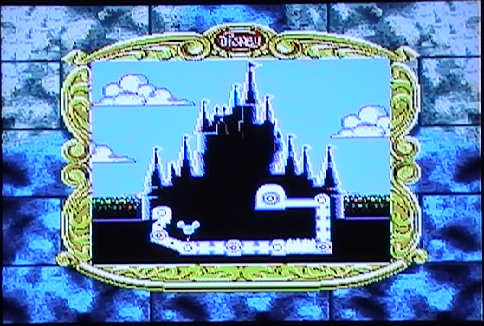
Feeling that they let fans of the first game down with The Great Circus Mystery and its more grounded to reality nature by comparison, Capcom decided to go back to basics and reinvigorate the Magical Adventure series' titular sense of magic and wonder once more here as a way of making it up for those disappointed in Game 2, as is evident by The Magical Quest-style chartered map inbetween stages. Already things are looking up! =)
 |
| Marking the beginning of a brand new adventure =) |
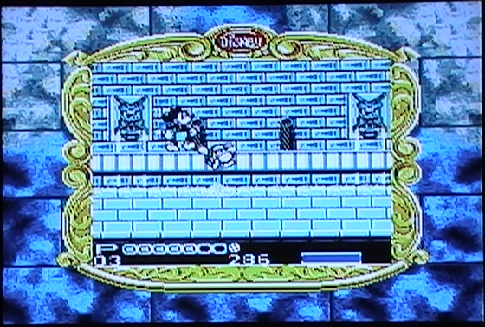
Okay, now let's finally talk about Magical Adventure 3! As Mickey (or Donald) you have the ability to move left and right, duck, jump and swim with the B button, pick up and/or chucking blocks or enemies with the Y button, use your magical abilities to a certain degree with the Y button, cycle between magic outfits with the L and R shoulder buttons, and once you've chosen which outfit you want to change into either a special power-up or back to normal just press the A button to do the job. This is the Super Famicom version's gameplay.
 |
| Haha, chucking enemies is fun! =D |
In the Game Boy Advance version the default actions have been stationed to different buttons to accommodate the handheld's button scheme. Movement is accomplished the same way, but jumping and swimming is now done via the A button, and the B button does all the main actions. Though in perhaps the strangest change yet, toggling between outfits is done with the L shoulder button but to change you need to press the R shoulder button. Umm, really? =/ I understand why that was done for the Sega version of The Great Circus Mystery--the MegaDrive/Genesis started out with three buttons and got commissioned three new ones during the middle of its lifespan--but it makes no sense here, especially since there is a Select button that Capcom could've taken advantage of for just that situation. I don't get it.
 |
| That guy knows how to make an entrance |
As was the case in the previous two platformers there are a total of three different magical outfits to change into, and the ones in this game are well chosen. Mickey's first outfit is a suit of armor (that sinks in water) with an extendable punching glove in hand, which charges up after each use; you can punch ahead of you, below you, or above you, for it is your main form of offense, as well as hold down the button to keep himself shielded. His second outfit has him climb columns and trees (and bump attack on each side) with his handy dandy rope, which he also launches horizontally to either spin stuff and enemies away, pull stumps back one step, use as a zipline, or deflect projectiles that make them fly right back where they came from. The third and final outfit turns him into a magician, using pigeons flying from his hat to work some magic on either enemies or objects in his way, provided he's got enough power in his card gauge. =)
 |
| I'm magic, snowflake! |
Unlike The Great Circus Mystery where Mickey and Minnie shared the same exact power-ups with the same exact functions, for this installment Capcom elected to make Donald's powers slightly different while serving a similar purpose. The first outfit he receives is a barrel armor which can float above water, hide inside and roll in either direction, but most importantly uses his mallet to mash enemies and blocks in. The climber outfit is similar to Mickey's, except that Donald launches his rope vertically instead. Finally, Donald wears for his third and final power-up an Arabian outfit with a fez on his head, launching a magic finger pointing hand to affect enemies and objects from his magic oil lamp; with Donald, you can hold the hand in place until you let go of the button (that is if you have enough of your gauge to work with).
 |
| We interrupt this game to bring you Yoshi's Island |
Each stage has got blocks which you can pick up and throw. Some of them when you stumble upon them include among the various content: coins, for which you can save up to spend at the general store; hearts to refill your health; in a handful of moments a heart container to augment your health capacity; fruit for bonus; Mickey and/or Donald plushies to earn a life; red gloves to speed up the charge of the first outfit; and playing cards to gain back your magic gauge. Thorough inspection will lead you to secret doors: one of them takes you to a secret room, another one takes you to a general store, and one of them takes you directly to


a bonus ga---- holy crap, a bonus game! =O We haven't seen one in a Disney Capcom game since Disney's Aladdin! What's especially neat about it is that you have a choice whether you want to take on it or go back to the game if you so desire; I like that. =) The object of the bonus is to pick up any one of the four cards laid down before you, and picking up a good character card will give you a certain reward, as many tries as your allowed; but pick up a Pete card, and you'll be dragged back automatically.
 |
Underwater areas are always a wonderful feast
for the eyes =) Well, in this version anyway... |
Once again Capcom has done a fantastic job with the visuals as Magical Adventure 3 looks gorgeous; but then, did you expect any different from them on the 16-bit console? =) They are absolute 16-bit visual masters. Each of the areas are visually interesting, thanks to combining a delightful mix of both color and polished detail in all the surroundings. The first area takes place in a nice little village with houses seen in the distant backdrop, some of them right above water (brings to mind Venice). Another example is the sandy area with the mountainous setting and sand coming down like waterfalls for which the sky gets slightly darker the more you traverse; the snowy area is cool to explore, especially with King Pete's castle looming so far in the distance; but I think my favorite part is the bulk of the fifth stage that transpires underwater where everything is appropriately wavy and immersive, making that turquoise blue stage feel atmospheric. =)
The Super Famicom original (like most other games on the console) was made on a square aspect ratio (with a tiny black border above it which I've excluded when saving these screenshots); but when Capcom converted it to the Game Boy Advance eight years later it got cropped to accommodate its small rectangular screen (think of it as the video game equivalent of pan-and-scan). If you were curious as to what extent it got cropped, this is the result:
The Game Boy Advance is known for having a much lighter color contrast than the solid scheme exhibited by the Nintendo 16-bit, but there is an option to select one of three schemes and one of them comes close to emulating the original look. =) Despite being reduced to a small size the visuals still look just as great and the animations and areas still have an equal feel to them...... eeeexcept for one, but I'll get to that momentarily.
 |
| Disney's Aladdin, eat your heart out! |
And while I'm on the subject of animations, the ones displayed from the main characters are very solid and fluid. While Mickey's normal posing and main animations are lifted straight from The Great Circus Mystery, I do like the charmingly swift and bouncy nature of his new ones; in particular when he uses his extendable punching glove (I love the sheen his shield makes when it points directly at us) and when he rotates to the other side of the column or tree he's climbing. =) But the real star in this regard is Donald; seeing him being given the Capcom treatment is just as delightful as it is humorous to watch. That's especially the case when it comes to his victory poses, his bouncy animated actions, and any time he loses health and goes through his angry pose.
 |
I always thought the fight against Mr. Blizzard
in Mr. Nutz would've been better if he used
ball and chain attacks against you too =P |
The roster of enemies is very charming, creative and imaginative for this Magical Adventure installment; as they comprise of sentient corn, mini Pete soldiers, caterpillars that become spiky pink with anger when jumped on (like a certain larva from Super Mario World), living pollen, scorpions, and crabs among others. The bee and sentient flame enemies even make a return from The Magical Quest, which is a nice throwback. =) The best part about them is their incredulous reactions when they've either been defeated or affected by your magic (the scorpion ones after seeing their new tail is positively priceless). The boss designs are cool too, as a good number of them utilize Mode 7 to good effect (like the giant flower and bigheaded octopus); the ones that don't use them are cool too in their own right, and King Pete looks great when you face him in the end.
 |
| Stowing away on a floating ship |
One of the low points of The Great Circus Mystery was its soundtrack, as aside from a handful of songs it was rather unremarkable, in and out of comparison to what was given in the first game. Capcom fixed that for Magical Adventure 3 as they've not only gone back to form and made a really fantastic score for this game but it's also the closest it gets to equating in quality to the one in The Magical Quest. Welcome back, Mari Yamaguchi (plus another composer, if sources are correct), we missed you. =) Not only are the compositions and melodies stronger and more magically befitting of their atmospheres this time around, but every once in awhile the instrumentation veers towards a grand epic feel. And given this is the last game in Mickey Mouse's Magical Adventure trilogy, I think it's highly warranted. =)
 |
| Climbing up pollenated trees |
Right from the get go you're treated to a fantastic number in the first stage that builds up to a very jovial, energetic, and warmly inviting theme. The pollenated forest theme is immersive in its quaint lighthearted melody; the underwater area theme sounds beautifully calm and atmospheric; and the snow-laden theme is incredibly haunting and appropriately chilling (especially with the string work). But my favorite song from the entire game transpires literally during the middle of the game in the fourth stage, belonging to the airship; the reason for that is because its music is amazingly uplifting and epic all at once, from the great buildup to the crescendo until it finally segues into riveting Final Fantasy-esque string work. =) The (mid)boss themes are all right, but the final theme is riveting. Well,... in the Super Famicom version anyway.
 |
| *insert trademark Nelson Muntz laugh here* |
2001 through 2006 was a really dark period for 16-bit loving gamers, as a select number of Super Famicom and Super Nintendo titles got ported to the Game Boy Advance to usually lesser results. While it's one thing for the visuals to be cropped to fit the screen, it's a whole other thing entirely when the soundtracks that used to sound beautiful in their native 16-bit console gets reduced to sounding bland and awful by comparison (thereby affecting its overall quality and diminishing the experience that should be had); and I think that everyone is in agreement that the Game Boy Advance's sound capabilities were just not good to begin with (though the sound effects themselves survived the transition for the most part). =( I don't have any links to provide for the handheld version's music, but just picture the links I did provide for the 16-bit original version playing in your head only in a much more muted, tinny, and faint-sounding condition. That's the Game Boy Advance's converted SFC/SNES music in a nutshell. This is why the Nintendo 16-bit will never be topped.
 |
| "Buy something will ya?" |
Like The Magical Quest and The Great Circus Mystery before it, Magical Adventure 3 has got three difficulty settings; with Easy mode having less enemies and more blocks as bosses take less damage to defeat them while Hard mode inhabits more enemies and has got less blocks as bosses take substantially more hits in order to oust them. However, in this installment things have changed: while you'll still find whole heart containers if you look thoroughly in some stages, in the general store you only buy quarters of heart containers (or if you land on Mickey's or Donald's respective girlfriends' cards in the bonus game), and should you get all four quarters you'll be rewarded one augmented health capacity. I like it, it keeps things fresh. =) It's also interesting how the trilogy evolved in terms of progression: losing a life in The Magical Quest meant restarting the stage portion over again, losing a life in The Great Circus Mystery resulted in you being revived on the spot you died in, but in here after you lose a life you'll reemerge from inside a balloon which you have only seconds to maneuver in any direction before it pops open. In the Super Famicart continuing your current progress after taking a break involved using literal character-oriented passwords, but in the Game Boy Advance version it's jettisoned in favor of a save function (not that I ever use those, but it's there if anyone needs them).
Exclusive to the Game Boy Advance port are three mini-games found under Party Mode which you can play if you're in a brief aside mood:
The first event has you go at it for sixty seconds to see how many rainbow-colored blocks you can mash and destroy before time runs out, and if you're worried that the abundance of blocks is going to run dry, that's okay: until it's over it never does.
The second mini-game is timed to see how fast you can climb up the pollenated tree and reach the goal. Bear in mind that every now and then there will be an obstacle that impedes your progress, whether it's something falling on your head or even pollen trying to reach you, so if any of these things come close to you just rotate yourself to the other side.
And finally in the third mini-game it's a one-on-one magician match to see who can turn the other into the frog (provided you have a heart icon); you only have one shot, so make sure to use it wisely otherwise you'll have to retrieve the heart again. This mini-game in particular has three different difficulty settings, and the harder the difficulty the more careful you'll have to be when conjuring your magic.
 |
| Kanji wizard |
Mickey & Donald: Magical Adventure 3 came out for the Super Famicom in December 1995, and sadly the original 16-bit format never came out in the West at the time for various reasons. One's probably attributed to Capcom wanting to move on from the 16-bit, but then if that were true then they wouldn't have localized Final Fight 3, Mega Man X3, or Marvel Super Heroes: War of the Gems. One other possible cause may have had to do with avoiding coinciding the same release date as Traveller's Tales' adaptation of PIXAR's Toy Story; is it a stretch? Sure, but it does seem feasible when you think about it. What it may have been in the end was probably lack of confidence on Capcom's part, either for the series based on the mixed audience reaction of The Great Circus Mystery in the West or, as aforementioned, did not have confidence with Donald as a (co)protagonist; which is a real shame, as Magical Adventure 3 is a really great game. =(
 |
| Bumpety bump |
The original Super Famicom version is great, anyway, as the Game Boy Advance version is actually not bad when treated as its own thing, but it still can't hold a candle to the 16-bit original. =) When the handheld edition came out in the early 2000's it received mixed to generally positive reviews, with the sole criticism being that like Capcom's other Disney games it was relatively short and easy. I do kind of wish Western gamers got their first exposure for this game on a superior format (namely the Nintendo DS, or a different console), but Disney Interactive likely took advantage of Capcom's Disney license while it was still relevant; it's just unfortunate that the good quality music had to be sacrificed in the process (I know not everyone's an audiophile like myself, but I genuinely care about the quality of the music's sound). =( Cropped in half though it may be, the visuals are still vibrantly wonderful to look at, and at least the gameplay remained intact.
Remember when I mentioned that the Game Boy Advance version matched the exact colors of the Super Famicom cart's visuals except for one? In that version the fifth stage's underwater section you swam through a beautiful wavy bluish turquoise-filled ocean. =) ..................
In the Game Boy Advance port, however, the fifth stage's underwater section had you swimming through a wavy ocean lathered in putrid puke green! XP Now to anyone that didn't get introduced to Magical Adventure 3 via the SFC original it might not be as distracting, but to those who have it's quite a flummoxing deal (especially as the water's hues are mismatched to their foreground; it's even worse when viewed on the GameCube's Game Boy Player). =/ What happened??
I could forgive the limited color capacities in the Sega version of The Great Circus Mystery as its color library wasn't anywhere near as plentiful as the one in Nintendo's 16-bit console. But this?? A handheld that supposedly has more power than the Nintendo 16-bit, that has as vast a color library? o_o ......you had one job, Capcom, one job!!!
 |
| A hammed up battle royale |
Unlike the first two games, where I found out about them via magazine (albeit their miniscule handheld ports), Magical Adventure 3 I found out about online roughly a decade or less ago and when I did I was like, "Whoa, there's a third one? That's awesome!" =D I remember reading about it enough times when I frequently visited RVGFanatic's website, as it always had me intrigued, but it wouldn't be until the early 2010's that I would be experiencing any game in the trilogy for the first time ever in their native 16-bit format. In the end of May 2012, after I had bought a Retro Duo it had opened up a doorway for me that allowed me to experience Super Famicom games from Japan; and actually this was one of the first games I had in mind to import, but one thing kept me from doing it that Summer: its price. I guess because it's in high value and demand that would make sense, but it's pretty jarring to me. So it wouldn't be until February 2013 that I would import my eleventh SFC cart at almost $40, the highest I've spent on a Super Famicart. And let me tell you: it was money well spent. =)
 |
There is another way to battle this wolf; I
should know, I speak from personal
experience =( |
Mickey & Donald: Magical Adventure 3 is a really enjoyable and great game to play, and in my opinion it improves on both its oldest and immediate predecessor. The gameplay is still polished and fun, the soundtrack is excellent, the worlds are wonderful, the battles are good, and the diverse forms of Mickey's and Donald's new powers really adds replay value. I especially loved how inbetween each stage was a narrative concerning you progression, blending in with the platformer's storybook motif (that had a better buildup than the second game and a better payoff than the first title). =) Yes, it is a bit on the easy side, but at least there's enough moments of challenge to make up for it; and depending on whether you look for secret doors or how well you play it takes roughly fifty to sixty minutes to beat in a single go (with seven stages, too). Another cool thing about the bosses is how some of them can be beaten with one power-up or another, like the armored wolf boss that I used to struggle battling before.


This one in particular was troublesome initially because he consistently tried to bounce and trap you on the side uncomfortably close with little room to react to the cannonball(s) he shoots at you, and at first I thought the rope was the only way to defeat him. But months ago I thought of trying the magician ability on him, and while the armored wolf still tries to close you in on a corner, it does make the battle more manageable, thank God. The fact that it took me over two years to discover this strategy albeit in miniaturized format is pretty sad. =(
 |
Mickey's given a brand new outfit by...
Parappa the Rapper? o~O |
And speaking of the Game Boy Advance version; I wish I could say that I only obtained a copy for the sake of the review, but that would be far from the truth (in fact, it wasn't planned). In October 2014 the SFC slot on the Retro Duo's board was off on the inside and to the extent of my knowledge irreparable, which meant I could no longer play SFC carts on it. The reason this is relevant was because back before it hit the fritz I managed to get sufficient images of Mickey Mouse, but none for Donald Duck (because conserving memory space, focusing on reviewing other titles, life); and I couldn't review this game without showing at least one gameplay image of Donald in it. I was in trouble. =< For the longest time since I've grown wise about the GBA's shortcomings and capabilities I flat out avoided buying ports of SFC/SNES games (because of the cropped screen and flat music), but because I needed some screenshots of Donald Duck in action and despite going against what I believe in I had to suck it in and imported the Japanese handheld port (costing half of what I spent for the SFC original).
 |
| Geez, that guy's a real turkey .........sorry |
I looked up awhile back that when Magical Adventure 3 was ported to the Game Boy Advance its Western translation mismatched Huey, Dewey, and Louie's names, which makes me cringe. In all the years the triplets have been around, you'd have to have never read any Scrooge McDuck comics, never watched Donald Duck cartoons, or not even watched DuckTales growing up to have been able to mess that up. Not wanting to suffer a version with a glaringly awkward blunder, I settled with the Japanese import (and since the original SFC edition was Japanese). I don't care if I can't read it so long as it entails averting embarrassment from misreading Donald's nephews' names. As for the quality of the Game Boy Advance version overall, it's good enough on its own, it plays good despite the poor treatment of the music, and even though the cropped screen might add some unneeded difficulty that wasn't in the original, it's not so bad if you're familiar with each areas' layout. =) It's not the Super Famicom original, but it's not a terrible port all things considered.


So there you have it: the end of the Nintendo 16-bit Disney Capcom era. It began with Mickey Mouse and it ended with Mickey Mouse. How fittingly full circle, and what a great way of bookending Mickey Mouse's Magical Adventure trilogy. =) In my book this is the best Mickey Mouse available on the console (not only that, but arguably the best Disney game on the SFC/SNES), and if you have the means I highly recommend you import it. If you can't however, even though it's not in high abundance, if you keep a look out there is an NTSC and PAL-formatted repro cart made for it floating around on eBay (with the GBA's translation), but like a lot of repro carts it's going to cost you if you're interested.


If you don't own a Super Famicom, Super Famiclone, or a modded SNES console, then the only other option is the Game Boy Advance port. It suffers poorly transitioned music and slight difficulty caused by the cropped screen due to overcrowding of enemies sometimes, but if you can look past that it's not a bad way to spend time on the handheld. Whichever edition you decide to purchase, you can't go wrong with the final installment of Mickey's Magical Adventure trilogy, and with Donald as an alternative character to choose from, it's even better. =) It's a story worth exploring, for the journey is just as good as the reward in the end; and that makes it all worthwhile.
My Personal Game Boy Advance Score: 7.5/10
My Personal Super Famicom Score: 9.0/10
<( ^o^)^TO EACH THEIR OWN^(^o^ )>
P.S. I swore in a P.S. in my The Great Circus Mystery starring Mickey & Minnie review that I hoped it would take less than sixteen months to get to this game. It has been exactly sixteen... months...... I need to start keeping promises I make to myself. =(
P.S. 2 When I say Donald Duck deserved better on the Nintendo spectrum, I mean it. Like, the last time we got a game dedicated to him was, what, thirteen years ago? Show of hands: who wants to see a new Donald Duck video game?? =) That so needs to happen! ...or; the reason the original 16-bit game didn't hit the West may have attributed to Disney Interactive handling Disney licenses at the time and they refused Capcom's game...? I don't know.
P.S. 3 I liked that Capcom added the bubbles to show how much breath you've got left underwater; looks like they've taken a cue from GRC's Mickey no Tokyo Disneyland Daibōken in that regard. Only question is: why does Donald need bubbles? He's a duck, isn't it part of his natural habitat to breathe underwater forever, or is that only applicable when he doesn't team up with Mickey? =|
P.S. 4 Personally speaking, I'd rather play Mickey's Ultimate Challenge than play a version of this game in the language I understand, because at least that game (average though it may be) doesn't mismatch Huey, Dewey, and Louie's names; no, even better, they're never identified period! *sigh* I have strictly personal standards sometimes. =(
P.S. 5 In absolutely irrelevant news: I've started to love an '80s movie that is a guilty please to me that I've seen a few times now, and that guilty pleasure is Jaws 3. Maybe not a good Jaws movie, or movie for that matter, but I can't help it; I actually find it fun to watch despite its problems (though it does have genuinely good things in it too, a couple of them being Alan Parker's score, and the idea behind the movie is not bad). In fact, I think I'll watch it again. X-)
P.S. 6 Capcom would make a few more Disney games between 1998 and 2003 after a three-year hiatus (including a certain GameCube flop), but they could never recapture their glory days of the late '80s and early to mid-'90s.
P.S. 7 If you thought I was being overcritical with the Game Boy Advance's shortcomings, wait until I cover Breath of Fire in the near future (mostly the SNES version, with only a tiny portion detailing the GBA port). You haven't seen overcritical yet. -_-
P.S. 8 The GBA shots were actual snaps I took in camera mode, while the SFC shots were what I captured from my camera's video mode. The fact that I could even pull off the former here (thanks to the latter not working anymore on my old laptop) as I played it is a testament to how far I will go to express my feelings of these games in my reviews (due to current conditions).
P.S. 9 *phew* I'm beat! Discussing both versions of the same game in one review has taken a lot out of me. x.x
Happy 20th Anniversary,
Mickey & Donald: Magical Adventure 3!!! =D
-----------------------------------------------------
Thank you for reading my review, I hope you liked it, please leave me a comment and let me know what you think. I hope you have a great Summer, and take care! =D